
Resilience in Action
How Cats Protection is becoming strong enough for what comes next
6/1/202615 min read

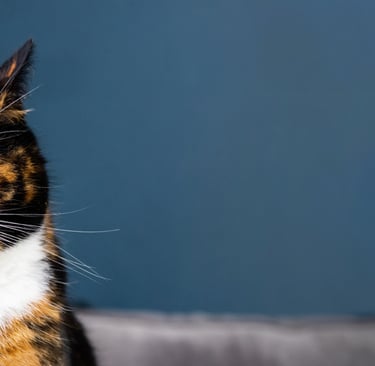
Prepared for circulation following the case study showcase: “Resilience in action: How three charities rewrote their future”.
Context. This note is adapted from John May’s contribution to the Charity Times Annual Conference, held on 21st May 2026. It reflects on Cats Protection’s experience of stabilising, implementing change and laying foundations for long-term impact.
“Resilience is not about bouncing back to where you were. It is about becoming strong enough for what comes next.”
Opening reflection
When we woke up this morning, my husband was deeply concerned that I was about to bare my soul to a group of peer charity chief executives - and that this was rife with reputational risk for me and for the charity.
I reassured him, of course. I said that charity chief executives are famously discreet, gentle and non-judgemental people.
So here goes.
Cats Protection is one of the UK’s oldest and largest animal welfare charities. We are nearly 100 years old, we have a national brand, a large volunteer base, a complex network of local services, and a mission that people care about deeply.
That is a huge strength. But it also means that when pressure comes, it comes through many channels at once.
The challenge
When I joined Cats Protection, the organisation was facing several challenges simultaneously.
There had been a period of reputational damage and governance strain. There were significant financial and operational pressures. Demand for our services was rising, particularly as the cost of living crisis affected cat owners and increased the number of cats needing help.
At the same time, parts of the organisation were tired, fragmented and, in some places, understandably mistrustful. Staff and volunteers cared passionately about the mission, but there was not always enough clarity about how all the different parts of the charity fitted together.
So the key challenge was not simply financial resilience, or operational resilience, or governance resilience. It was all of those things at once.
The real question was: how do you stabilise an organisation while also asking it to change?
That is difficult, because stability and transformation can feel as though they are pulling in opposite directions. People want reassurance, and rightly so. But if reassurance becomes avoidance, nothing changes. Equally, if transformation becomes too abstract or too fast, people feel done to rather than part of the work.
And I should say at the outset that none of this has been a solo endeavour.
I have been extraordinarily well supported throughout by my Chair, by trustees, by an exceptional group of senior leadership colleagues, and by staff and volunteers across Cats Protection.
At different moments, different people have stepped forward and led. Sometimes visibly, sometimes quietly, sometimes formally, sometimes simply by creating confidence around them. That has mattered enormously.
Decision 1: Rebuilding trust
For me, the first important decision was to focus on rebuilding trust - with trustees, with staff, with volunteers, with supporters and with external stakeholders.
And I should be honest: that has probably been the hardest thing to achieve.
In many organisations, people are told that things are going to happen, and then they do not. They are promised change, or clarity, or follow-through, and then the moment passes. Sometimes that is because leaders lose courage. Sometimes it is because the system absorbs the intention and carries on much as before. Sometimes it is because the difficult decision is easier to announce than it is to implement.
So rebuilding trust was never going to be about saying reassuring things. It had to be about doing what we said we would do.
That meant being honest about the pressures without catastrophising them. (See what I did there. I promise, no more feline puns.) It meant saying, “we have real challenges”, but also “we have the people, the purpose and the reach to meet them.” And it meant being prepared, as leaders, to follow through on change even when that felt uncomfortable.
I think that has required real courage across the organisation. Courage from trustees in leaning into difficult questions. Courage from senior leaders in making and delivering decisions. Courage from staff and volunteers in staying engaged, even when they were uncertain or weary.
And that trust had to be built in both directions. It was not simply about people trusting me, or the senior team, or the Board. It was also about leaders trusting the organisation: trusting staff and volunteers with the truth, trusting trustees to lean into difficult conversations, and trusting colleagues to lead from where they stood.
More than three years on, I would not pretend that this work is complete. Rebuilding trust is still work in progress. But it is real work, and I think the organisation is stronger because we have been willing to stay with it.
From strategy to implementation
One important point is that I did not arrive at Cats Protection to write a new strategy. The charity already had an agreed ten-year strategy, and we are now about halfway through that period. My task was not to strategise for the sake of it, or to create a shiny new set of words because a new chief executive had arrived.
The task was to take good intentions and make them workable.
That meant being honest that one of the causes of our financial instability and institutional burnout was that too much was being attempted at once. There was no shortage of ambition. In fact, quite the opposite. The challenge was to stop trying to do everything simultaneously, to create a clearer sense of sequence, and to lay the foundations properly so that ambition could become real impact.
That is less glamorous than launching new initiatives. It involves slowing some things down, stopping some things, and doing the disciplined work of making sure the organisation has the capacity, confidence, systems and decision-making to deliver. But without that, strategy remains aspiration.
Decision 2: Operating model, local service delivery and whole systems thinking
The second decision was to move the organisation towards a clearer operating model.
Cats Protection has grown over many decades, and not always in a tidy or linear way. That is true of many charities. We inherit structures that made sense at one point in our history, but which may no longer help us to deliver the greatest impact.
So we began to ask some fundamental questions. What are we here to do? Where can we have the greatest impact for cats and the people who care for them? What should be local, what should be regional, and what needs to be national? How do we support volunteers properly, rather than simply rely on their goodwill? And how do we become more consistent without losing the local passion and commitment that make the charity so special?
That has led us increasingly towards a whole systems way of thinking.
Because one of the traps in organisational change is to isolate the problem too neatly. You think you are looking at finance, but you are also looking at volunteering. You think you are looking at governance, but you are also looking at identity. You think you are looking at operations, but you are also looking at supporter experience, local confidence, staff capacity, and the way decisions are made.
At Cats Protection, that has been especially important as we have thought about the future of local service delivery. We are, at heart, a charity of around 10,000 people - volunteers and staff - working in communities across the UK.
And one of the things I have been very conscious of is that, as chief executive, I am a relatively transient being. I have the privilege of leading the charity for a period of its history, but there are volunteers and staff for whom Cats Protection is, quite literally, their life’s work. They have given years, sometimes decades, of service. They hold memory, relationships, local trust and deep practical wisdom.
For many people, Cats Protection is not an abstract national organisation. It is the person who answers the phone, the volunteer who traps and neuters a stray cat, the fosterer who opens their home, the centre team caring for cats every day, or the colleague helping an owner through a difficult moment.
So any serious conversation about change has to honour that human reality. It has to recognise the commitment, identity and local knowledge of our people, while still asking whether the system as a whole is helping us to reach as many cats, and support as many people, as we can.
That is where the target operating model becomes important. Not as a dry organisational chart, but as a way of asking how Cats Protection should work if we are serious about maximising our impact.
What should be done locally? What is better supported regionally? What needs national consistency? Where do decisions sit? How do we make sure that volunteers and staff are properly supported, and that the experience of a cat owner, supporter or volunteer is as good in one part of the country as it is in another?
For me, the target operating model is not about tidiness. It is about impact. It is about making sure that our structure, our systems, our people and our decision-making are all aligned behind the same charitable mission.
That work has depended on people being willing to hold more than one truth at once.
Trustees have had to keep their eyes on long-term stewardship. Senior leaders have had to make practical choices in real time. Volunteers and staff have continued to care for cats, support owners and keep services going, even while change has been happening around them.
That kind of commitment is easy to understate, but it is the foundation on which everything else rests.
Clearer decision-making
That is also why we have started to bring more discipline to decision-making.
We have been introducing RAPIDS, not as a bureaucratic tool, but as a way of making decisions clearer and more inclusive.
I first came across RAPIDS more than 20 years ago, when I was a fledgling charity chief executive and was lucky enough to receive some mentoring from a senior executive at Bain and Company.
At its simplest, RAPIDS is a way of clarifying decision-making. It asks who should recommend a course of action, who needs to agree, who will perform or implement it, who should provide input, who will decide, and who needs to support the decision once it has been made.
The value is not in the acronym itself. The value is in forcing a clear conversation about where decisions really sit, who needs to be involved, and how you avoid the slow organisational fog that descends when everyone is sort of involved, but no one is quite clear who is deciding.
For me, RAPIDS matters because confused decision-making is one of the quiet enemies of resilience.
If no one knows where a decision sits, decisions either drift upwards, get stuck, or are remade several times in different rooms. That burns energy, creates frustration, and undermines confidence.
Clarity about decision rights is not glamorous, but it is liberating. It helps people know where they can lead, where they can contribute, and where they need to align.
Decision 3: Four priorities
The third decision was to frame the work around a small number of clear priorities.
For Cats Protection, I have talked about four pillars: becoming an exemplary voluntary organisation; increasing our impact on cat welfare; becoming more customer and supporter focused; and securing our financial sustainability.
Those four things are connected. You cannot have financial sustainability without supporters. You cannot grow impact without volunteers and staff working well together. You cannot be truly customer or supporter focused unless the organisation is clear about who it serves and why.
That clarity has mattered. It has given us a way of talking about change that is not just a set of projects, but a coherent direction of travel.
Decision 4: Values, behaviours and leadership culture
The fourth decision was to invest in leadership and culture.
In a large charity, resilience is not created by the chief executive having a clever plan. It is created when people throughout the organisation understand the direction, feel able to contribute, and are trusted to lead within their own areas.
That is where values and behaviours matter.
At Cats Protection, our values are not intended to be decorative. They are meant to help us make choices: putting cats first, being knowledgeable, working as one, being compassionate and being courageous.
Those values have become especially important during change, because they give us a shared language for how we behave when the work is difficult.
It is relatively easy to talk about compassion when everything is going well. It is harder, and more important, when decisions are contested.
It is relatively easy to talk about courage in the abstract. It is harder when courage means following through, stopping something, changing something, or having the conversation that everyone knows is needed.
That has been one of the most humbling parts of the process.
Different colleagues have led at different times. Some have brought grip and rigour. Some have brought deep operational knowledge. Some have brought emotional intelligence and calm. Some have challenged the thinking, which is often the most generous contribution of all.
I have been very lucky in my senior leadership colleagues. They have been selfless, thoughtful and, at times, remarkably brave.
That is why I have put such emphasis on the senior leadership team, a newly created Senior Management Team that reports to them, the wider leadership community, and the relationship between trustees, staff and volunteers.
We have been working to become more joined up, more disciplined in decision-making, and more honest about trade-offs.
The Senior Management Team
The Senior Management Team has become an important bridge between strategy and implementation.
These are colleagues who are close enough to the work to understand the practical realities, but senior enough to think beyond the boundaries of their own departments or directorates. Their role is not simply to represent their own patch. It is to help the whole organisation make progress.
That matters because implementation is not just a cascade. It is a conversation.
The Senior Management Team can spot connections, commission work from colleagues rather than assume they have to do everything themselves, hold parallel conversations that inform delivery, and empower others to contribute.
Done well, that group becomes one of the places where strategy becomes real - not by centralising everything, but by helping good work happen in the right places, with the right people involved, and with enough shared understanding to keep the organisation moving.
That same professional generosity is increasingly visible across the organisation. Leaders are seeking to understand and accommodate the needs of other directorates, not simply defend the boundaries of their own. That is a far cry from the traditional charity tension between income generation and service delivery.
Of course those tensions still exist, and many others besides. But increasingly they are being seen as opportunities for collaboration and co-creation, rather than walls to defend against attack.
My sense is that charities are sometimes very good at adding things, and much less good at stopping things. But resilience requires choice. It requires us to say not only what matters, but what matters most.
Strategy Reconnect
One of the things that has had the greatest impact has been creating space for proper strategic conversation. Not just presenting a finished strategy, but involving people in the questions.
Our Strategy Reconnect work, for example, is helping us explore how we help more cats, how we work as a dispersed organisation, how we strengthen volunteering, and how digital needs to support the future charity.
Crucially, this is a cross-organisation conversation, not a chief executive roadshow. It is being facilitated by colleagues in a range of roles, led by a very talented Head of Strategy. We are holding face-to-face mini-conferences in community halls around the UK, with staff and volunteers from every part of Cats Protection having their say.
People are being invited to contribute not just on the work they normally do, but on the wider future of the charity.
A volunteer may have views on digital. A centre colleague may have views on supporter experience. A national colleague may have views on local service delivery.
These things may have nothing to do with their usual role, or they may have everything to do with it. Either way, they are being trusted with the conversation.
That kind of work matters because people support change better when they can see the thread.
Brand as shared identity
Another important part of the story has been the development and implementation of a new brand for the charity.
That work began before I arrived, and has been critical to the success of our transformation. A brand is sometimes treated as though it is simply a matter of colours, logos or communications. But done well, it is much more than that. It is a way of helping people understand who we are, what we stand for, and how we show up in the world.
For a dispersed charity with a large volunteer and staff community, that matters. A strong brand can create coherence without crushing local identity. It can help supporters, volunteers, staff, adopters, cat owners and policy makers recognise the same charity, wherever they meet us.
In that sense, the brand has not been a cosmetic exercise. It has been part of the infrastructure of change: a shared identity that helps the organisation feel more confident, more connected and more purposeful.
Finance, shared services and mission infrastructure
There have also been more practical decisions: strengthening governance, improving financial grip, reviewing structures, recruiting key senior leaders, investing in systems, and looking hard at where our work really makes the biggest difference.
And I have come to value even more deeply the importance of finance, shared services and professional expertise.
In charities, we can sometimes talk as though the mission lives only in the visible frontline work. Of course that work matters profoundly. But the mission also lives in the finance team that helps us make sustainable choices, in the people who understand risk, governance, technology, people, property, data and compliance, and in the shared services that allow colleagues and volunteers to do their best work.
Great subject matter experts do not take us away from mission. They make mission possible. They bring the expertise and experience that help good intentions become sustainable action.
I learned a wonderful maxim from the great Dame Julia Cleverdon, when she was my boss at Business in the Community. She used to say: “You can’t change the world without balancing the books.”
I have never forgotten that. Passion matters. Purpose matters. But if we are serious about impact, we also have to be serious about stewardship, discipline and financial sustainability.
And that includes being honest that direct service provision, vital though it is, is not the whole answer.
If we are serious about reaching our charitable mission, we have to think further upstream. We have to educate, advocate and influence. We have to shape public understanding of cat welfare. We have to influence policy and practice. We have to help prevent problems before they arrive at the door of a centre, a fosterer, a volunteer or an advice line.
That also means investing in the unglamorous foundations of modern charity effectiveness: great data, good IT, and systems that help people do their work rather than get in the way.
For us, a really good CRM is part of that. We are now putting one in place, and it matters because relationships matter: with supporters, volunteers, adopters, cat owners, campaigners and communities. If we cannot understand those relationships properly, we cannot serve them properly.
None of that is glamorous, but it is the stuff of organisational resilience. It is the plumbing.
Good data and good systems are not back-office luxuries. They are mission infrastructure.
And again, that plumbing is not done by one person. It is done by trustees who ask the right questions, by senior leaders who take responsibility, by staff who keep improving services, by volunteers who bring commitment and local knowledge, and by people who are willing to say, “this is hard, but it matters.”
What has worked
I think three things have worked.
First, being candid. People do not need false reassurance. They need clarity, honesty and a sense that there is a route through.
Second, connecting change to purpose. At Cats Protection, the purpose is powerful. People will accept difficult decisions if they can see how those decisions help more cats and better support the people who care for them.
Third, respecting the emotional life of the organisation.
Charities are not machines. People bring identity, commitment, loyalty and sometimes grief to organisational change. That is especially true in volunteer-rich organisations.
You cannot simply announce a new model and expect people to fall into line. You have to understand what people feel they may be losing, as well as what the organisation may gain.
What I would do differently
I would probably have moved even earlier to create a shared language around the change.
In a large and dispersed charity, if you leave gaps in the story, people will fill those gaps themselves. Sometimes they fill them with hope, but often they fill them with anxiety.
So I would be even more deliberate, earlier on, about explaining the “why”, the “why now”, and the “what this means for me”.
I would also pay even more attention to sequencing.
In a pressured organisation, everything can feel urgent. But if everything is urgent, people become exhausted and confused.
Looking back, I would put even more emphasis on helping people understand what comes first, what comes later, and what is not yet decided.
And I would be even clearer that resilience is not about bouncing back to where we were.
In some ways, that is the wrong metaphor.
The point is not to return to an old version of Cats Protection. The point is to become the version of Cats Protection that the future needs: still rooted in our history, still powered by volunteers, still putting cats first, but more focused, more connected, and more confident about the impact we can have.
Closing reflection
For me, the leadership lesson is this: resilience is not built in the crisis alone. It is built in the quality of relationships, the clarity of decisions, and the courage to face reality before reality forces the issue.
And if there is one thing I would want to underline, it is that resilience is collective.
As I acknowledged earlier, I only hold this role for a chapter in the charity’s life. Others have made Cats Protection their life’s work. That is why stewardship matters so much: we are not simply managing the organisation we inherited, we are shaping the organisation others will carry forward.
I have received remarkable support from my Chair and trustees, from senior leadership colleagues, from the Senior Management Team, and from staff and volunteers across the charity.
People have led when they needed to lead, supported when they needed to support, challenged when they needed to challenge, and kept the mission at the centre throughout.
That generosity has been one of the great strengths of the organisation.
That is the work we are doing at Cats Protection. It is not finished. It probably never will be.
But we are in a very different place from where we began, and my sense is that the organisation is beginning to feel not just more stable, but more purposeful about the future.
“The honest answer is that resilience is not one big dramatic act. It is the slow, collective work of trust, clarity, discipline, purpose and care.”
JOHN MAY
OXFORDSHIRE
MAY 2026
Lilywood Advisory Services Ltd
Registered in England and Wales
Company number: 16907039
Registered office: Lilywood House, North Lane, Weston on the Green, Bicester OX25 3RG
hello@lilywood.net
© 2026. All rights reserved.
Privacy notice | Cookie policy
We respect your privacy and collect only what we need.